


Is Ha Giang Right for First-Time Travelers?
The short answer is yes — but the right preparation matters enormously.
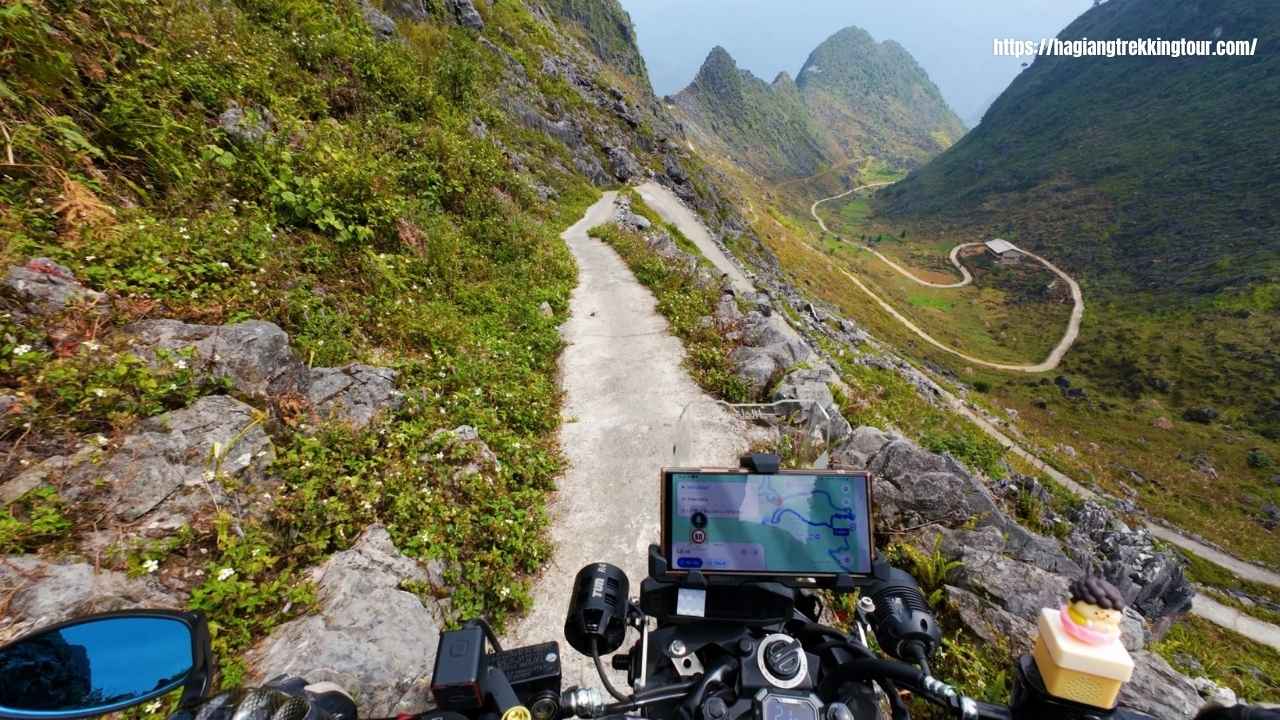
Ha Giang sits in the far north of Vietnam, close to the Chinese border. It is famous for the Ha Giang Loop, a mountain road circuit that passes through some of the most dramatic karst limestone landscapes in Southeast Asia, winding through ethnic minority villages, terraced fields, and river gorges that most travelers never see anywhere else.
It is not Hội An. It is not a resort destination. Ha Giang requires a little more flexibility, a little more tolerance for basic conditions, and — crucially — the right choice of experience for your comfort level. But it is absolutely accessible for first-time visitors who choose thoughtfully. Contact us and you'll get honest advice, fair local pricing, and real support from professional guides who have been navigating these roads for years.
Many of our guests have never ridden a motorbike in their lives. Some have never stayed in a traditional village homestay. They almost always leave Ha Giang calling it the highlight of their entire Vietnam trip. The key is choosing the right experience — not the most adventurous one on paper.
Who Ha Giang is ideal for:
- ✓ Travelers who love dramatic natural scenery far from tourist crowds
- ✓ Solo travelers looking for something authentic and memorable
- ✓ Couples who want intimacy and adventure without the manufactured tourist experience
- ✓ Small friend groups who want genuine exploration
- ✓ Travelers interested in ethnic minority cultures — over 22 groups live in Ha Giang province
- ✓ People who are happy with simple, clean accommodation rather than luxury hotels
- ✓ Hikers and nature lovers who want to go beyond the main road
Ha Giang has far less tourist infrastructure than Đà Nẵng or Hội An. Mobile signal can be patchy or absent in parts of the Loop. Roads are mountain roads — winding, sometimes narrow, occasionally affected by weather. This is part of what makes it so special. Just go in with the right expectations.
How Many Days Do You Really Need?
This is the question we hear most often, and the honest answer is: more than most people plan for. The Ha Giang Loop covers roughly 350 km of mountain roads. If you rush it in two or three days, you will spend most of your time driving and very little time actually experiencing the place.
You will be driving for most of the day every day, with little time to stop, explore, eat properly, or absorb anything. This is the trip that leads to regret and "I wish I'd had longer." Only choose this if your schedule truly leaves no option.
Workable for a highlight version of the Loop. You will see Đồng Văn, Mã Pí Lèng Pass, and at least one authentic local market. Accommodation will be simple but genuine. Not rushed, but no room for detours.
The ideal balance. Time for trekking side trips, slower mornings, authentic market visits, real homestay dinners, and genuine connection with the places you pass through. This is what most guests wish they had booked.
Add trekking in Hoàng Su Phì or Đồng Văn, extra nights in remote villages, or extend into Cao Bang. Ideal for photographers, writers, and anyone who wants to go very deep. Returns are common — guests come back and stay longer the second time.
| Duration | Loop Coverage | Trekking? | Market Visits | Pace | Our Rating |
|---|---|---|---|---|---|
| 2–3 days | Partial | No | Unlikely | Very rushed | Not recommended |
| 4 days | Full Loop | Unlikely | Maybe 1 | Manageable | Minimum |
| 5–6 days | Full Loop | Yes | 2–3 | Comfortable | ⭐ Recommended |
| 7+ days | Full + Extra | Deep treks | Multiple | Relaxed | For explorers |
Which Experience Fits You Best?
Ha Giang is not a one-size-fits-all destination. There are several different ways to do the Loop, and the right choice depends entirely on your confidence level, your travel style, and what you want to feel at the end of the trip. If you're still unsure which option fits you, message us — our local team will help you choose the right experience, not just the most expensive one.
You ride on the back of a motorbike while a local expert guide does all the driving and navigation. Zero motorbike experience required. Your guide shares local stories, takes you to hidden spots, handles everything. The most human, most immersive way to see Ha Giang.
A private vehicle with a driver and optional guide. Best for couples, families, older travelers, or anyone who wants maximum comfort without missing any of the scenery. Great flexibility to stop whenever you want.
Join a carefully selected small group of 6–10 travelers with a local guide. The best option for solo travelers who want social connection, structure, and value without going fully private.
Combine Loop driving with trekking routes into remote hill villages. Overnight in genuine local homestays away from the main road. For hikers and adventurers who want to go deeper than the road shows.
Rent a semi-automatic or automatic bike and ride independently. Only recommended if you already have significant mountain riding experience. Not for first-timers. The roads are narrow, steep, and sometimes wet.
Build your own itinerary with a private guide and vehicle. Choose your pace, your stops, your accommodation level. Ideal for special trips, honeymoons, and anyone who wants a bespoke Ha Giang experience.
| Experience | Experience Needed | Best For | Flexibility | Cost Level |
|---|---|---|---|---|
| Easy Rider | None | Solo, couples, first-timers | Medium | Mid-range |
| Private Car | None | Families, comfort seekers | High | Higher |
| Small Group | None | Solo travelers, budget | Low | Budget |
| Trekking | Basic fitness | Hikers, adventurers | Medium | Mid-range |
| Self-Drive | Must be experienced | Seasoned riders only | Very high | Low |
Many travelers choose self-drive because it sounds adventurous on paper — without understanding how challenging mountain roads actually are. If you have never ridden a motorbike on steep, winding, sometimes slippery mountain terrain, please start with Easy Rider. You can always come back and self-drive on your second visit. We see injured self-drivers every year who chose before they were ready.
Best Time to Visit Ha Giang
Ha Giang has a genuine mountain climate that shifts significantly by season. Getting your timing right can transform your experience — especially for photography, wildflowers, and rice terrace colors.
Buckwheat flower season. The plateaus around Đồng Văn turn pink and purple with wildflowers against a dramatic stone backdrop. Cool, dry weather. Peak photography season. Book 6–8 weeks ahead — this period fills fast.
Mild temperatures, vivid green rice terraces on the slopes, spring blossoms, lighter crowds than autumn. One of the most photogenic times for landscapes and local life. Highly recommended for first-timers.
Roads can be slippery and at risk of landslides. Low cloud reduces visibility. Not recommended for first-time visitors. Experienced, flexible travelers sometimes find beauty in the mist — but it requires resilience.
Very few tourists, peaceful atmosphere, lower prices. But it gets genuinely cold in the mountains — sometimes near or below freezing at night. Pack serious layers and accept that conditions may be harsh.
The exact dates for buckwheat flower bloom vary by year and altitude. Typically the highest areas bloom first (mid-October), followed by lower areas into late November. If you are planning specifically for the flowers, message us close to your travel date and we will give you up-to-date local information.
How to Get from Hanoi to Ha Giang
Ha Giang is approximately 320 km north of Hanoi. There is no direct train or flight. Here are your real options:
| Method | Duration | Cost (approx) | Comfort | Best For |
|---|---|---|---|---|
| Sleeper Bus | 5–6 hours | 150,000–250,000 VND | Basic | Budget travelers, young backpackers |
| Limousine / Sleeper Van | 5–6 hours | 300,000–450,000 VND | Good | Mid-range travelers wanting more comfort |
| Private Car (arranged by us) | 6–7 hours | From $65 USD | Very comfortable | Couples, families, groups wanting flexibility |
| Self-Drive Motorbike | 8–10 hours | Fuel + bike rental | Tiring | Experienced riders only |
Sleeper Bus — The Budget Option
Overnight sleeper buses depart from Mỹ Đình bus station in Hanoi and arrive in Ha Giang Town in roughly 5–6 hours. Cost is typically 150,000–250,000 VND. Perfectly reasonable for budget travelers comfortable with Vietnamese long-distance buses. Most buses arrive early in the morning.
Limousine Van — The Mid-Range Option
More comfortable sleeper vans with wider berths and fewer passengers. Around 300,000–450,000 VND. A solid choice if you want something between the basic bus and a full private car. Several providers run this route daily.
Private Transfer — Our Recommendation for First-Timers
A private car or minivan arranged through us means you depart from your Hanoi hotel at your preferred time, can stop at scenic points along the route, and arrive rested with all your luggage organized. Particularly valuable for families, couples, and anyone with a precise schedule. With professional local guides and real on-the-ground support, the journey from Hanoi can feel like the start of the experience rather than the stressful part before it. We can include this in your tour package.
If you book a tour with us, we coordinate your Hanoi pickup directly. No bus stations, no taxi-finding in an unfamiliar city, no confusion about where to meet. You just tell us your hotel address and we handle the rest.
Money, ATMs & Cash Tips
Ha Giang is almost entirely a cash economy. This is not a minor inconvenience — it is a fundamental fact you need to plan around before you leave Ha Giang Town. Most homestays, small restaurants, village markets, and roadside stops accept only cash.
Do not rely on card payments or Apple Pay anywhere outside Ha Giang Town. Running out of cash on the Loop is genuinely stressful and avoidable. Withdraw at least 2–3 million VND more than you think you will need before heading out of town each morning.
Practical Cash Tips
- ATMs in Ha Giang Town: Agribank, Vietcombank, and BIDV branches near the central market area
- Đồng Văn town has one or two ATMs, but they are unreliable — do not count on them
- Cash USD can be exchanged at gold/jewellery shops in Ha Giang Town and at some guesthouses
- Vietnamese banknotes: 500k (purple), 200k (red), 100k (green) are the most useful denominations
- Always carry small notes (20k–50k) for snacks, drinks, and tips at local food stalls
What to Eat in Ha Giang
The food in Ha Giang is genuinely excellent — and completely different from the Vietnamese dishes most travelers know from Hanoi or Ho Chi Minh City. The local cuisine reflects the Hmong, Tày, and Dao communities of the mountainous north.
A rich horse or pork stew cooked in a large communal pot, traditionally eaten at market day gatherings. Warming, deeply flavored, and a genuine local ritual. Find it at Sunday markets in Đồng Văn and Mèo Vạc.
A staple food for the Hmong community. Steamed corn flour served as a base with vegetables or broth. Earthy, filling, and completely unlike anything you'll find in the south. Simple and honest.
Rice cooked together with corn kernels. Slightly sweet, aromatic, and very satisfying after a day of mountain roads. Usually served with grilled meat or smoked fish at mountain homestays.
Buffalo meat slowly smoked over a wood fire, dried and packed with spices. Sold as a snack at local markets. Rich, pungent, intensely savory — an excellent road snack. Buy it wrapped in newspaper from market vendors.
Pancakes or flatbreads made from buckwheat flour — available mainly during the buckwheat flowering season. Slightly nutty, earthy flavor. One of those rare foods that connects you directly to the local landscape.
A local spirit distilled from corn, produced in villages around Bản Phố. Clear, strong, with a warm and slightly sweet corn note. Offered at practically every homestay — share it with your hosts and guide for one of the best Ha Giang memories.
If your route passes through a Sunday market — particularly in Đồng Văn or Mèo Vạc — eat breakfast there. The atmosphere is extraordinary, the food is local and inexpensive, and you will see ethnic communities from across the region arriving in traditional dress to trade. Plan your itinerary to hit at least one market morning.
Local Culture & Homestay Etiquette
Ha Giang Province is home to over 22 different ethnic minority groups. The communities you encounter — primarily Hmong, Tày, Dao, and Lô Lô — have lived in these mountains for generations. Understanding and respecting their customs is not just polite; it directly shapes the quality of your experience.
- 👟 Remove your shoes before entering any homestay. Always. Even if no one asks, it is expected.
- 📸 Ask before photographing people, especially elders, women working, and children. A smile and a gesture asking permission takes two seconds and means a great deal.
- 👕 Dress modestly at local markets and near village communal areas. No need for anything formal, but avoid overly revealing clothing in rural communities.
- 🍵 Accept food and tea when offered by your homestay hosts. Refusing is considered impolite and slightly offensive. You do not have to eat everything, but accept what is offered.
- 🤫 Keep your voice down in the evenings. Village life starts very early. Your hosts may have been awake since 5am farming. Respect the rhythm of the place.
- 🎁 Small gifts for homestay hosts are a lovely gesture — fresh fruit, quality instant coffee, children's art supplies. Never give money directly to children, as this creates dependency patterns that harm communities over time.
- 💰 Pay the agreed price and do not aggressively bargain at local markets. For street food and crafts, gentle negotiation is fine, but remember that small margins feed families who earn very little.
Many homestay hosts speak limited Vietnamese and no English. Your guide acts as the bridge between cultures. Approach every interaction with patience and genuine curiosity. The guests who remember Ha Giang most vividly years later are almost always those who invested in these human moments rather than rushing through checkboxes.
What a Real Day in Ha Giang Actually Feels Like
One of the most valuable things we can do in this guide is be completely honest about what a typical day on the Ha Giang Loop actually looks and feels like — not the Instagram version, not the worst-case version, but the real one.
You wake up around 7am in a homestay. It is cool or genuinely cold depending on the season. The air smells of woodsmoke and mountain mist. You eat a simple breakfast cooked by your host — usually eggs, rice or noodles, sometimes local corn bread. A thermos of green tea is on the table. Local children may appear at the door, curious.
By 8 or 8:30am you are on the road. If you are on an Easy Rider tour, your guide will already have the engine running and your bag strapped to the bike. The first hour of riding through morning mist over a mountain road is something that is very difficult to describe in words and very easy to remember for the rest of your life.
By midday you will have covered 60–90 km of mountain road, with several stops — viewpoints, villages, maybe a roadside stall selling fresh sugarcane juice or corn wine. Lunch is in a small town, usually a family-run restaurant with a handwritten menu and no English translation. Your guide orders for you. The food arrives fast and tastes excellent.
The afternoon brings the most dramatic scenery: the approach to Mã Pí Lèng Pass, the Nho Quế River gorge, the stone plateau villages of Đồng Văn. You will stop for photographs more often than you planned. Time bends here in the best possible way.
By 4 or 5pm you arrive at the night's accommodation — homestay or small local guesthouse. You may be the only guests, or you may share dinner with a handful of other travelers doing the same route. Dinner is shared with your guide. This dinner is, almost without exception, the part people describe first when they talk about their Ha Giang trip.
🌙 What people remember most
- The morning mist over the limestone peaks on day two
- Standing at Mã Pí Lèng Pass with the Nho Quế River 1,600 metres below
- Dinner conversations with their guide around a wood fire
- The Sunday market at Đồng Văn — colour, noise, life
- The strange, peaceful quiet of a village night with no phone signal
- How different the world looked from the saddle of a mountain road at dawn
What to Expect — and What Not to Expect
Expect this:
- ✓ Roads that are genuinely challenging at times but always manageable with the right support
- ✓ Accommodation that is simple, clean, and real — not resort-style
- ✓ Patchy or absent mobile data signal once you leave the main towns
- ✓ Moments of profound silence and natural beauty
- ✓ Local food that is inexpensive, unfamiliar, and usually excellent
- ✓ A physical component even by vehicle — long days on mountain roads are tiring in a good way
- ✓ Itinerary flexibility — weather, road conditions, local events all affect plans
Do not expect this:
- Luxury hotels, spas, or resort amenities anywhere on the Loop
- Fast Wi-Fi or stable mobile data outside of Ha Giang Town and Đồng Văn
- Western coffee shops, smoothie bowls, or brunches
- A perfectly smooth road from start to finish
- An itinerary that never needs adjusting — flexibility is part of the experience
- Hot showers every night (some homestays, not all)
Travelers who struggle most in Ha Giang are usually those who arrived expecting the comfort levels of Đà Nẵng or Hội An. Travelers who love it most are usually those who came with open expectations and genuine curiosity. The gap between disappointment and delight is almost entirely about the mindset you bring, not the place itself.
Common Mistakes First-Time Visitors Make
- Booking too few days. Four days is the minimum. Two or three days is a rushed, exhausting version of Ha Giang that leaves most travelers wishing they had stayed longer. The Loop is not a day trip.
- Choosing self-drive without mountain riding experience. The roads are narrow, steep, sometimes wet. Every season we hear from travelers who got hurt, stuck, or terrified because they overestimated their ability. Please choose Easy Rider for your first visit.
- Not withdrawing enough cash before the Loop. There are almost no ATMs after you leave Ha Giang Town. Withdraw 2–3 million VND more than you think you need. Cash runs out faster than expected.
- Booking through random online aggregators or brokers. Many booking platforms have no actual presence in Ha Giang. Your booking goes through several middlemen before reaching a local guide. This inflates cost and reduces quality. Book directly with a team based here.
- Overpacking. Motorbike touring means limited luggage. A 30–40L daypack is ideal. Leave your large suitcase in Hanoi at your hotel. You do not need what you think you need up here.
- Visiting in rainy season without understanding the risks. June–August can be beautiful, but landslides are possible, roads are slippery, and visibility is often very poor. Not recommended as a first visit.
- Ignoring local cultural norms. Entering a homestay without removing shoes, photographing people without asking, being loud in the evenings — these small things create friction that reduces the warmth and connection Ha Giang is famous for.
Red Flags Before Booking Any Ha Giang Tour
Not every company offering Ha Giang tours is operating at the same quality. Here are warning signs that should make you pause before booking:
- The price is suspiciously low. If a 4-day full tour costs less than $80–90 USD per person including accommodation, meals, and guide, something is being cut significantly. Usually the guide quality, the accommodation, or both.
- No real address in Ha Giang. If their website shows only a Hanoi or Ho Chi Minh City address, or no address at all, they are a broker. Your trip will be passed to an unknown local operator at the last moment.
- Guide does not speak your language. For English-speaking travelers, a guide who cannot communicate with you is essentially a driver. Your experience depends heavily on the guide relationship.
- No real reviews on independent platforms. Look for Google Maps reviews with photos, TripAdvisor reviews, or GetYourGuide reviews — not just testimonials posted on the company's own website.
- They cannot answer specific questions. Which homestay are we staying in on night two? Who is my guide? What happens if there is a landslide? A real local team answers these immediately. Brokers deflect or give vague responses.
- Generic copy-paste itinerary. If every day looks identical to every other Ha Giang tour page online, they are running a commoditized product with no real local knowledge behind it.
Questions to Ask Before You Book
These are the questions we recommend asking any operator before committing to a booking. A trustworthy local team will answer all of these clearly, confidently, and immediately.
- ? Where is your team physically based — Hanoi, or Ha Giang?
- ? Can I speak with my guide directly before booking?
- ? Which specific homestays will I stay in on each night?
- ? What happens if a road is blocked by weather or a landslide?
- ? What is the exact group size for my tour?
- ? What meals are included and which are not?
- ? What is your cancellation and rescheduling policy?
- ? Do you have 24-hour emergency contact during the trip?
- ? What is your guide's language level and background?
We are based at 10 Nguyen Thai Hoc, Ha Giang Town. We will introduce you to your guide before you book. We will tell you exactly which homestays you will stay in. We have a 24-hour WhatsApp line throughout every trip. We have been operating here since 2015. We answer questions honestly — including the ones that might steer you toward a different option if it is genuinely better for your trip. The goal is not simply to book a tour, but to help you have a Ha Giang experience that feels right for you and genuinely hard to forget.
Which Tour Fits Your Travel Style Best?
Everyone who comes to Ha Giang wants something slightly different. Here is a direct, honest guide to finding the right match. And if none of these feel obvious yet — that is completely normal. Message us with your dates and travel style and we will recommend the right option honestly, based on what actually suits you.
→ Easy Rider Tour. Your guide drives everything. You are a passenger on a living cultural journey. Zero experience needed. Most guests say this was their best travel decision.
→ Private Ha Giang Loop. A dedicated guide and vehicle just for the two of you. Set your own pace. Stop whenever you want. Ideal for honeymoons and romantic trips.
→ Small Group Loop. Carefully curated groups of 6–10. You share the journey with like-minded travelers. Best social experience, great value.
→ Trekking in Ha Giang. Into the hills, away from the road, through villages only reachable on foot. Genuine immersion. Two options: Hoàng Su Phì rice terraces or Đồng Văn highland villages.
→ 7-Day Extended Loop. Combines full Loop with trekking, extra market days, and longer homestay time. Built for people who want to truly absorb the place rather than pass through it.
→ Private Car Tour. All the scenery, all the cultural depth, none of the motorbike. Comfortable vehicle, flexible schedule, same amazing guides.
Frequently Asked Questions
Technically yes — Vietnamese law requires a valid licence for bikes above 50cc. In practice, foreigners self-drive regularly and enforcement is inconsistent. However: if you are involved in an accident without the correct licence, your travel insurance is very likely to be invalid. On mountain roads where serious accidents do happen, this is a real and significant risk. We always recommend Easy Rider or private car for first-time visitors to Ha Giang.
Yes. Ha Giang is considered one of the safer destinations in Vietnam for solo female travelers. Local communities are generally very respectful and harassment is uncommon. We have many solo female guests every year across all tour types. We recommend Easy Rider or small group tours for solo female visitors — having a local guide with you at all times adds both safety and significantly enriches the experience.
Yes. Foreign nationals are required to obtain a travel permit to enter the border zone, which includes Đồng Văn, Mèo Vạc, and parts of the northern Loop. The permit is issued at the Ha Giang Province Tourist Department in Ha Giang Town. Cost is approximately 40,000–50,000 VND and takes 10–20 minutes. If you book a tour with us, we handle the entire permit process for you at no extra charge.
By Easy Rider or private car, the physical demand is low — you are a comfortable passenger on a scenic road journey. Days are long (8–9 hours including stops) but not strenuous. By self-drive motorbike, it is physically demanding — wrists, back, and legs tire significantly after a full day in the saddle. Trekking extensions are genuinely physical and require reasonable fitness. Please tell us your fitness level when you enquire and we will be honest about what suits you.
Yes, and for October–November we strongly recommend booking 6–8 weeks ahead. We confirm all bookings over WhatsApp and email. A 30% deposit secures your dates, with the balance paid on arrival in Ha Giang. We accept international bank transfer, Wise, and cash. We have never asked anyone for full prepayment before arrival — if an operator demands this, treat it as a red flag.
Mountain weather is unpredictable and we plan for it. Our local team monitors conditions daily and adjusts itineraries when needed — changing the direction of the loop, slowing the pace, or routing around problem sections. We will never take guests on roads we consider dangerous. We communicate all changes clearly and always explain our reasoning. Flexibility and trust in your local guide are the two most important things on days when conditions shift.
Yes, with the right tour choice. A private car or minivan tour of the Loop is perfectly manageable for older travelers or those who cannot ride motorbikes. You see the same scenery, visit the same villages, and stay in the same homestays — just from a comfortable vehicle. We regularly take guests in their 60s and 70s who describe it as one of the best travel experiences of their lives. Please tell us your situation when you enquire and we will design the trip around your comfort.
Pack light — 30–40L backpack maximum. Essential items: warm layers (even in summer, mountain nights get cold), a lightweight rain jacket, comfortable walking shoes with grip, a power bank, cash in VND, sunscreen, and any prescription medications. A good headtorch is useful in homestays. Do not bring your large suitcase — there is nowhere to put it on a motorbike or in a small mountain vehicle, and you genuinely will not need most of what seems essential at home.