

Is Cao Bang Worth Visiting for First-Time Travelers?
The honest answer is yes — and for some travelers, Cao Bang ends up being more memorable than places they had been far more excited about in advance.
Cao Bang Province sits in the far northeast of Vietnam, close to the Chinese border. It is one of the least-visited provinces in the country among international tourists, which is genuinely one of its strengths. The landscapes here — karst mountains, emerald rivers, vast waterfalls, jungle-covered limestone plateaus — are extraordinary. And because the province sees far fewer visitors than Sapa, Ha Long Bay, or even Ha Giang, there is a sense of quiet and authenticity that is increasingly rare in northern Vietnam.
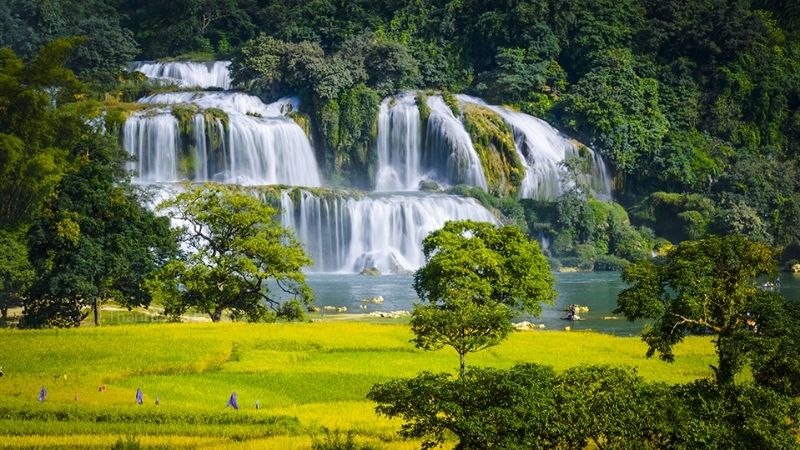
Ban Gioc Waterfall, the centrepiece of any Cao Bang trip, is the largest waterfall in Southeast Asia and sits directly on the Vietnamese–Chinese border. No photograph does it full justice. The width, the noise, the spray, and the setting — surrounded by karst peaks and flooded paddy fields — make it one of those rare places that arrives faster than expected and stays in your memory for years.
We guide travelers on this route regularly. The guests who arrive with modest expectations — curious but not certain — almost always leave with the feeling that Cao Bang was an unexpected highlight. Contact us and you'll get honest advice from guides who know this route well, with fair pricing and real support before you book.
Who Cao Bang is ideal for:
- ✓ Travelers who want dramatic natural scenery with fewer crowds than more famous spots
- ✓ Photography enthusiasts — Ban Gioc and the surrounding karst landscape are exceptional
- ✓ Travelers comparing Cao Bang with Ha Giang who want to understand what each offers
- ✓ Couples and solo travelers who want a quieter, more immersive northern Vietnam experience
- ✓ Visitors who have already done Ha Giang and want to go deeper into the northeast
- ✓ Travelers who love waterfalls, caves, and local border culture
What Cao Bang is Best Known For
Cao Bang is not a single attraction — it is a province with multiple highlights spread across a relatively large area. Understanding what exists and where helps you plan a realistic itinerary.
The largest waterfall in Southeast Asia and the defining experience of any Cao Bang trip. Three tiered cascades drop across a 300-metre width on the Vietnamese-Chinese border. Bamboo raft rides take you to the base. Most visitors say no photo prepared them for the real thing.
A vast cave system 3 km from Ban Gioc, with extraordinary stalactite and stalagmite formations across nearly 3 km of walkable chambers. One of the most impressive cave systems in northern Vietnam and usually visited on the same day as Ban Gioc.
The remote cave and mountain area where Ho Chi Minh lived and worked after returning from decades of exile in 1941. Historically significant and set in a genuinely beautiful river valley. A meaningful stop for those interested in Vietnamese history.
The mountain road circuit around Cao Bang province connecting the city, Ban Gioc, Nguom Ngao, Pac Bo, and smaller scenic viewpoints. Less famous than the Ha Giang Loop but similarly dramatic, and significantly quieter — often almost entirely empty of other tourists.
The river leading into Ban Gioc Waterfall, surrounded by karst mountains and rice paddies. The approach to Ban Gioc along this valley is one of the best parts of the trip — even before reaching the waterfall itself.
Cao Bang is home to significant Tay and Nung ethnic minority communities. Village homestays in the Ban Gioc area offer an authentic rural experience that feels very different from the more commercialized ethnic tourism of Sapa.
Ban Gioc Waterfall — What It's Really Like
Ban Gioc is the kind of place where the gap between expectation and reality runs in your favour. Most travelers who visit say it is bigger, louder, and more spectacular than they had anticipated. And because it sits on the Vietnamese-Chinese border, there is an unusual feeling of being at the literal edge of the country.
The waterfall itself has three main tiers separated by rocky islands and vegetation, spreading across roughly 300 metres of width. The main drop falls around 30 metres. During the wet season or just after — September and October are peak months — the volume of water is extraordinary and the spray is heavy enough to soak you at close range.
The bamboo raft experience
Bamboo rafts ferry visitors across the Quay Son River to the base of the waterfall, putting you within metres of the cascade. This is not a gimmick — it is genuinely one of the best ways to experience the full scale of the falls and the mist and sound up close. Cost is typically around 50,000–80,000 VND per person and takes 20–30 minutes.
The border context
Part of Ban Gioc Waterfall falls on the Chinese side of the border. Vietnamese and Chinese tourism infrastructure both operate here, and there are border markers visible in the water. This adds an unusual geopolitical texture to the visit — it is one of the few places in Vietnam where you are simultaneously at a natural wonder and a live international border.
Ban Gioc is busiest on Vietnamese national holidays and Chinese public holidays (when Chinese tourists cross in large numbers). A weekday morning visit, especially in September or October, can give you significant stretches with very few other visitors. If you plan your route with us, we can adjust the approach timing to avoid the busiest periods.
The entrance fee to the Ban Gioc area is approximately 45,000 VND per person. The bamboo raft ride is an additional 50,000–80,000 VND. Both are very reasonable relative to the experience. Bring cash — card payments are not available at the ticket office.
How Many Days Do You Really Need in Cao Bang?
The distance between Cao Bang City and Ban Gioc Waterfall is about 90 km. The roads are scenic but winding mountain routes — not motorway driving. Planning your days around realistic travel distances makes a significant difference to how relaxed the trip feels.
Day 1: Hanoi to Cao Bang City (or overnight bus). Day 2: Ban Gioc Waterfall and Nguom Ngao Cave. This is tight but workable if your primary goal is Ban Gioc and you are comfortable with long drive days. You will not experience the Loop or Pac Bo.
Day 1: Transfer to Cao Bang. Day 2: Ban Gioc and Nguom Ngao. Day 3: Pac Bo and return transfer. A proper visit with time to enjoy each place rather than rush. This is our standard recommendation for a dedicated Cao Bang trip.
Covers the full Cao Bang Loop at a comfortable pace. Includes Ban Gioc, Nguom Ngao, Pac Bo, scenic valley drives, a village homestay, and unhurried mornings. This is what most guests who do the full Loop wish they had booked from the start.
The full northern Vietnam experience. Cao Bang Loop (3–4 days) combined with the Ha Giang + Cao Bang 5-day tour. For travelers who want to see the best of both provinces without rushing either. Highly recommended.
| Duration | Ban Gioc | Nguom Ngao | Pac Bo | Full Loop | Pace |
|---|---|---|---|---|---|
| 2 days | Yes | Yes | No | No | Very rushed |
| 3 days | Yes | Yes | Yes | Partial | Manageable |
| 4 days | Yes | Yes | Yes | Full | ⭐ Comfortable |
| 7–10 days | Yes | Yes | Yes | Full + Ha Giang | Relaxed |
Best Time to Visit Cao Bang
Cao Bang has a mountain climate with distinct wet and dry seasons. Getting the timing right matters significantly — especially for Ban Gioc Waterfall, which is dramatically different between seasons.
Ban Gioc is at maximum flow after the monsoon rains. The waterfall is at its most spectacular and the surrounding landscape is vivid green. This is the best window for photography and the most dramatic experience overall. It is also the busiest period — plan ahead.
Clear weather, moderate temperatures, and vivid green terraces. Ban Gioc carries reasonable flow and the tourist crowd is significantly smaller than autumn. An excellent choice for first-time visitors who want good conditions without the peak-season pressure.
Heavy rain, road flooding risk, and reduced visibility. Not recommended for a first visit. Experienced, flexible travelers sometimes find dramatic beauty in the mist, but the roads can be genuinely difficult and Ban Gioc access occasionally restricted.
Fewer tourists, lower prices, peaceful atmosphere. Ban Gioc flow is reduced in the dry season. It is still beautiful but different in character. January and February can be very cold in the mountains — pack serious warm layers.
How to Get from Hanoi to Cao Bang
Cao Bang is approximately 270 km northeast of Hanoi. There is no direct train or flight. Your main options are sleeper bus or private transfer — both have real advantages depending on your priorities.
| Method | Duration | Cost (approx) | Comfort | Best For |
|---|---|---|---|---|
| Sleeper Bus | 6–7 hours | 200,000–320,000 VND | Basic | Budget-conscious travelers |
| Limousine Van | 6–7 hours | 350,000–500,000 VND | Good | More comfort, reasonable cost |
| Private Car (arranged by us) | 7–8 hours | From $70 USD | Very comfortable | Couples, families, flexible schedule |
| Self-Drive Motorbike | 9–11 hours | Fuel + rental | Tiring | Experienced riders only |
Sleeper Bus — The Budget Route
Several overnight bus companies run Hanoi to Cao Bang daily from Gia Lam or Luong Yen stations. Cost is typically 200,000–320,000 VND. Buses arrive in Cao Bang City early morning, which works well for an early start toward Ban Gioc. The road quality has improved significantly in recent years, making this more comfortable than it used to be.
Private Transfer — Our Recommendation for First-Timers
A private car means you depart at your chosen time, stop at scenic points along the route (there are several worth seeing on the Hanoi–Cao Bang highway), and arrive rested. Particularly recommended if you plan to continue to the Ban Gioc area on the same day. With professional local guides and real on-the-ground support, a private transfer can feel like the start of the experience rather than the stressful logistics before it.
If you are combining Cao Bang with Ha Giang, consider doing the route as a loop — Hanoi to Cao Bang, then Cao Bang to Ha Giang (or reverse). This avoids backtracking to Hanoi and adds significant scenic variety. We organise this combined route regularly and can advise on which direction suits your schedule better.
Should You Visit Cao Bang Alone or Combine It with Ha Giang?
This is one of the most common questions we receive, and the honest answer depends entirely on your available time, travel style, and what kind of trip you are looking for. We work with travelers who are still deciding every day — so it is completely normal if you have not yet chosen between a dedicated Cao Bang trip or the combined route.
| Cao Bang Only | Ha Giang Only | Combined Route | |
|---|---|---|---|
| Best for | Waterfall focus, quieter trip | Mountain roads, loop scenery | Full northern Vietnam |
| Days needed | 3–4 days | 4–6 days | 7–10 days |
| Main highlight | Ban Gioc Waterfall | Mã Pí Lèng Pass | Both |
| Crowd level | Very quiet | Moderate | Varies |
| Road conditions | Moderate mountain | Challenging mountain | Varied, challenging |
| Scenery type | Waterfall, caves, valleys | Loop, peaks, terraces | Everything |
| Budget | Lower (shorter trip) | Mid-range | Higher (longer trip) |
Choose Cao Bang only if:
- You have 3–4 days and Ban Gioc Waterfall is your primary goal
- You want a quieter, less-touristed version of northern Vietnam
- You prefer valleys, caves, and waterfalls over mountain loop roads
- You have already done Ha Giang and want something different
Choose Ha Giang only if:
- You have 4–6 days and want the most dramatic mountain loop scenery in Vietnam
- You are interested in ethnic minority cultures along the Loop
- The motorbike Easy Rider experience is your primary interest
- You want the more famous, more visually iconic northern Vietnam destination
Choose the combined route if:
- You have 7–10 days and want to see the best of both
- You are visiting northern Vietnam once and want the full picture
- You want both the Ha Giang Loop mountain experience and Ban Gioc Waterfall
- Budget and time allow — this is the trip most guests remember most vividly
If you can do both, do both. The combined Ha Giang and Cao Bang route is one of the finest road trips in mainland Southeast Asia. The landscapes are completely different from each other and they complement rather than duplicate each other. If you only have one shot at northern Vietnam, this is the route. Contact us and we will help you plan it honestly — not the longest version, but the right version for your schedule.
Money, Cash & Practical Travel Tips
Cao Bang City has ATMs, but once you leave the city toward Ban Gioc and the outer Loop, cash is essential. The same rule applies here as in Ha Giang: the further you are from the provincial capital, the less likely any payment method other than cash will work.
There are no reliable ATMs in the Ban Gioc village area. Entrance fees, bamboo raft rides, food, and any local purchases all require cash. Withdraw enough in Cao Bang City before you leave — typically at least 500,000–800,000 VND per person for the Ban Gioc day.
Practical tips:
- Entrance fee to Ban Gioc area: approx. 45,000 VND per person
- Bamboo raft ride: 50,000–80,000 VND per person
- Nguom Ngao Cave entrance: approx. 40,000 VND per person
- Pac Bo Complex entrance: approx. 15,000 VND per person
- Local meals in Ban Gioc village: 60,000–120,000 VND per dish
- Mobile signal is patchy near Ban Gioc — download offline maps before departing Cao Bang City
What to Eat in Cao Bang
The food in Cao Bang reflects the province's Tay and Nung ethnic minority communities. It is very different from what most travellers eat in Hanoi — and genuinely excellent once you know what to look for.
Steamed rice rolls with pork, wood ear mushroom, and fried shallots — a local version that is lighter and different in texture from the southern style. The definitive breakfast in Cao Bang City.
The rivers around Ban Gioc are clean and cold, producing excellent freshwater fish. Grilled whole fish served with local herbs and dipping sauces at riverside restaurants near the waterfall is a highlight of the area.
Five-colour sticky rice, coloured naturally with local plant dyes. A speciality of Cao Bang and the surrounding provinces, served at local markets and festivals. Beautiful to look at, genuinely good to eat.
Similar to Ha Giang, Cao Bang has excellent smoked and dried meats sold at local markets. Particularly the smoked pork (thit lon muoi) from Tay village communities — served sliced with rice and fresh greens.
The cluster of local restaurants on the road approaching Ban Gioc are excellent value and serve genuinely local food — grilled fish, river prawns, sticky rice, and stir-fried vegetables. Eat here rather than at the more commercial stalls right at the waterfall entrance. Your guide will know the best spots.
Where to Stay in Cao Bang
Accommodation in Cao Bang ranges from budget guesthouses in the city to simple but genuine homestays near Ban Gioc. The province has no luxury hotels — and this is not a problem if you come with the right expectations.
Clean, affordable guesthouses and small hotels in the city centre. Good base for ATM access, food, and early-morning departures toward Ban Gioc. Rooms typically 200,000–500,000 VND per night. Best for travelers who prefer a proper bed and hot shower.
Local family homestays in the Ban Gioc and Truc Lam village area. Simple wooden houses, shared facilities, home-cooked meals. Often include an evening with the host family and a morning by the river before the day-trippers arrive. Genuinely the highlight of the trip for many guests.
A small number of mid-range guesthouses and lodges have opened near the waterfall area in recent years. More comfortable than homestays but less atmospheric. Good choice for travelers who want proximity to Ban Gioc without the very basic conditions of a traditional homestay.
Simple overnight stops along the Cao Bang Loop, particularly between Ban Gioc and Pac Bo. Basic but functional. These make the 4-day loop version possible without returning to Cao Bang City each night. Usually arranged by your guide or tour operator.
The homestay options near Ban Gioc are limited in number and fill quickly during peak season (September–November). If you plan to stay in the Ban Gioc area — which we strongly recommend for at least one night — book or arrange this at least 4–6 weeks ahead during high season. If you book a tour with us, we handle all accommodation arrangements for you.
What to Expect — and What Not to Expect
Expect this:
- ✓ A waterfall that is genuinely larger and more spectacular than you imagined
- ✓ Very few other international tourists — Cao Bang is significantly quieter than Ha Giang
- ✓ Roads that are scenic but take longer than they look on a map
- ✓ Simple accommodation — clean, functional, not luxury resort standard
- ✓ Cash-only economy outside Cao Bang City
- ✓ Patchy mobile signal, especially near Ban Gioc and on the outer Loop
- ✓ Excellent local food that is very different from Hanoi cuisine
Do not expect:
- Luxury hotels, spas, or Western-style amenities anywhere outside Cao Bang City
- Stable mobile data or Wi-Fi in the Ban Gioc area
- The same level of tourist infrastructure as Ha Giang (Cao Bang has significantly less)
- A smooth, perfectly timed trip — mountain roads and local conditions require flexibility
- Card payments at any attraction, restaurant, or accommodation outside the city
The relative lack of tourist infrastructure in Cao Bang is genuinely one of its best qualities. The goal is not simply to book a tour, but to help you have a northern Vietnam experience that feels right for you — and for many travelers, the quietness of Cao Bang is exactly what makes the trip feel real and worth remembering. With professional local guides and real on-the-ground support, this is much easier to navigate than it sounds.
Common Mistakes First-Time Visitors Make
- Visiting Ban Gioc on a national holiday. Vietnamese and Chinese national holidays both bring significant crowds to Ban Gioc. A weekday visit in September or October — outside of public holidays — gives you a dramatically different experience. Check the calendar before you book.
- Trying to do Ban Gioc as a day trip from Hanoi. It is technically possible but it means 12+ hours of driving for 2–3 hours at the waterfall. This is not a day trip. Stay at least one night in the area.
- Not withdrawing enough cash before leaving Cao Bang City. ATMs do not exist near Ban Gioc. Withdraw at least 800,000–1,000,000 VND per person before departing the city.
- Underestimating road distances. 90 km on mountain roads takes 2.5–3 hours in Cao Bang, not 90 minutes. Build real driving time into your schedule or you will arrive at Ban Gioc in the late afternoon and miss the best light.
- Booking through a Hanoi broker with no local presence in Cao Bang. Like Ha Giang, there are many operators who resell Cao Bang tours without any actual connection to local guides or accommodation. Ask for specifics: which homestay, which guide, what happens if the road is blocked. A genuine local team answers these immediately.
- Skipping Nguom Ngao Cave. It is only 3 km from Ban Gioc and takes around 1.5 hours. Almost everyone who visits rates it one of the highlights of the trip. Do not skip it to save time — rearrange your schedule instead.
Red Flags Before Booking Any Cao Bang Tour
The same principles that apply when booking a Ha Giang tour apply here. Cao Bang has fewer operators, which means fewer but equally real risks from choosing the wrong one.
- ? Where is your team physically based — Hanoi or Cao Bang/Ha Giang?
- ? Which specific homestay or accommodation will I stay in on each night?
- ? Can I speak with my guide before booking?
- ? What happens if Ban Gioc road access is restricted?
- ? What meals are included and which are not?
- ? What is your emergency contact arrangement during the trip?
- ? What experience does my guide have on this specific route?
We are based at 10 Nguyen Thai Hoc, Ha Giang Town, and guide the Cao Bang route regularly. We will tell you exactly which accommodation you will stay in, introduce you to your guide before you book, and have a 24-hour WhatsApp line throughout every trip. If your situation calls for something different from what we offer, we will tell you honestly — not just push the tour that benefits us most.
Which Trip Style Fits You Best?
Everyone who visits Cao Bang is looking for something slightly different. Here is a direct guide to matching the right experience to your travel style. If you are still unsure, message us — our local team will help you choose the right option, not just the most expensive one.
→ Ban Gioc 3-day tour. Hanoi to Cao Bang, then Ban Gioc and Nguom Ngao Cave, then Pac Bo and return. Clean, focused, not rushed. The right starting point for Cao Bang.
→ Ha Giang + Cao Bang combined loop. Our 5-day trekking and motorbike tour connects both provinces in one continuous journey. The best single trip we offer for anyone with enough time.
→ Private car tour of Cao Bang. All the highlights — Ban Gioc, Nguom Ngao, Pac Bo — from a private vehicle with a knowledgeable local guide. No motorbike required. Excellent for couples, families, and older travelers.
→ 4-day full Cao Bang Loop. Covers the complete loop at a relaxed pace, timed for optimal Ban Gioc light and including the best valley and mountain viewpoints. One night homestay in the Ban Gioc area.
→ Cao Bang with village homestay. Combines the Loop highlights with a proper night in a Tay or Nung village homestay near Ban Gioc. Home-cooked food, early-morning walks, and a very different kind of travel experience.
→ Message us on WhatsApp. We work with travelers who are comparing these two destinations every day. Tell us your dates, budget, and what kind of experience matters most — we will give you an honest answer, not a sales pitch.
Frequently Asked Questions
Yes, strongly. Ban Gioc is consistently one of those places that exceeds expectations rather than disappointing them. The combination of sheer scale (300 metres wide), the setting (karst mountains, rice paddies, river valley), and the relative quietness compared to Vietnam's most-visited sites makes it genuinely special. Nearly every guest who visits says it was worth the journey. The key is spending at least one night in the area rather than rushing it as a day trip.
Yes, completely. The Vietnamese-Chinese border at Ban Gioc is a standard, functioning tourist destination with normal entry procedures. There are border markers in the river and on the land, Vietnamese border guards are present, and thousands of tourists (Vietnamese, Chinese, and international) visit every year without incident. As a tourist visiting from the Vietnamese side, there are no special restrictions beyond the standard tourist area access and the need for a basic permit for some sections of the route — which your guide handles.
Foreign nationals visiting the border zone around Ban Gioc may require a local travel permit, similar to the permit required for parts of the Ha Giang Loop. In practice, this is a straightforward administrative step — your guide or tour operator handles it as standard. If you book a tour with us, we take care of all permit requirements. The permit costs are minimal and take very little time to obtain.
They are genuinely different experiences. Ha Giang is primarily about the mountain loop road — winding passes, dramatic karst peaks, motorbike culture, and a stronger ethnic minority village scene. Cao Bang is more waterfall and cave focused — Ban Gioc is the centrepiece, supported by cave systems, river valleys, and a significantly quieter atmosphere. Ha Giang tends to attract more adventurous travelers; Cao Bang tends to appeal to those who want dramatic natural scenery with more peace and less tourist infrastructure. Both are excellent. Many travellers do both.
Technically yes — independent travel is possible in Cao Bang. But for first-time visitors, a local guide adds significant value: knowledge of the best stop timings, access to homestays that are not advertised online, help with the border permit, navigation on roads where signage is minimal, and the cultural context that makes the villages and historic sites meaningful rather than just scenic backdrops. If you are an experienced independent traveler in Southeast Asia, self-guided is viable. For most first-timers, a guide makes the trip substantially better.
The most efficient and scenic route is to do them as a loop — start from Hanoi, travel to Ha Giang first (4–5 days on the Loop), then cross from Ha Giang east to Cao Bang (1 day transit), do the Cao Bang circuit and Ban Gioc (2–3 days), then return to Hanoi from Cao Bang. This avoids backtracking through Hanoi and gives you natural momentum across both provinces. Our Ha Giang + Cao Bang 5-day tour covers this combined route as a guided journey.
Yes. A private car tour of Cao Bang covers all the major highlights — Ban Gioc, Nguom Ngao Cave, Pac Bo, and the Loop scenery — from a comfortable vehicle. No motorbike experience needed. We have guests in their 60s and 70s who rate Cao Bang as one of the best travel experiences of their lives. Just let us know your situation when you enquire and we will design the trip accordingly.